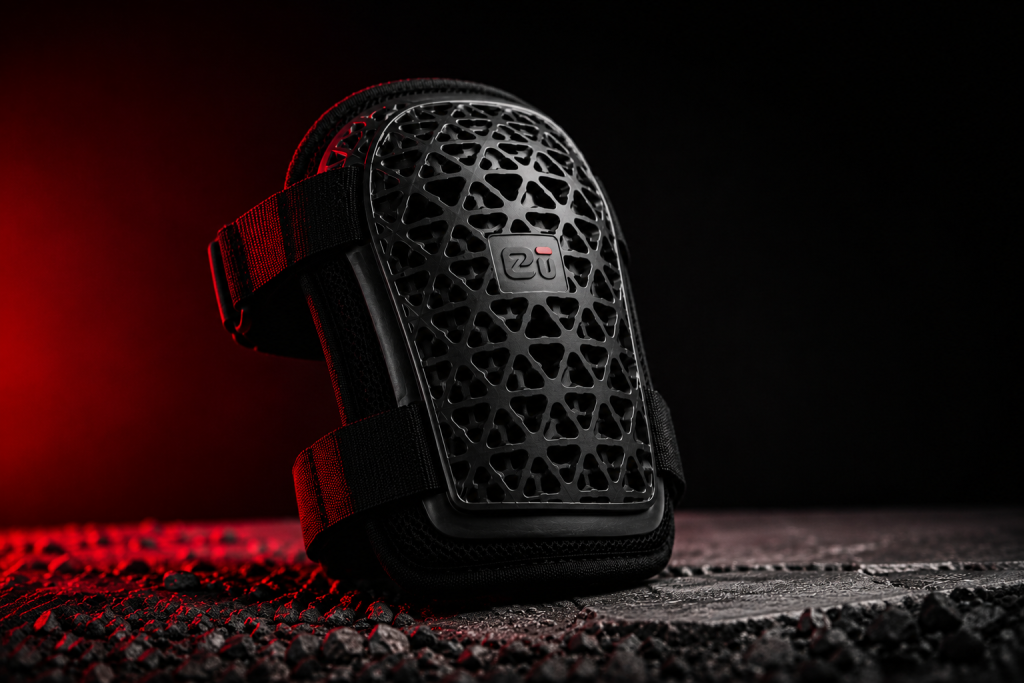
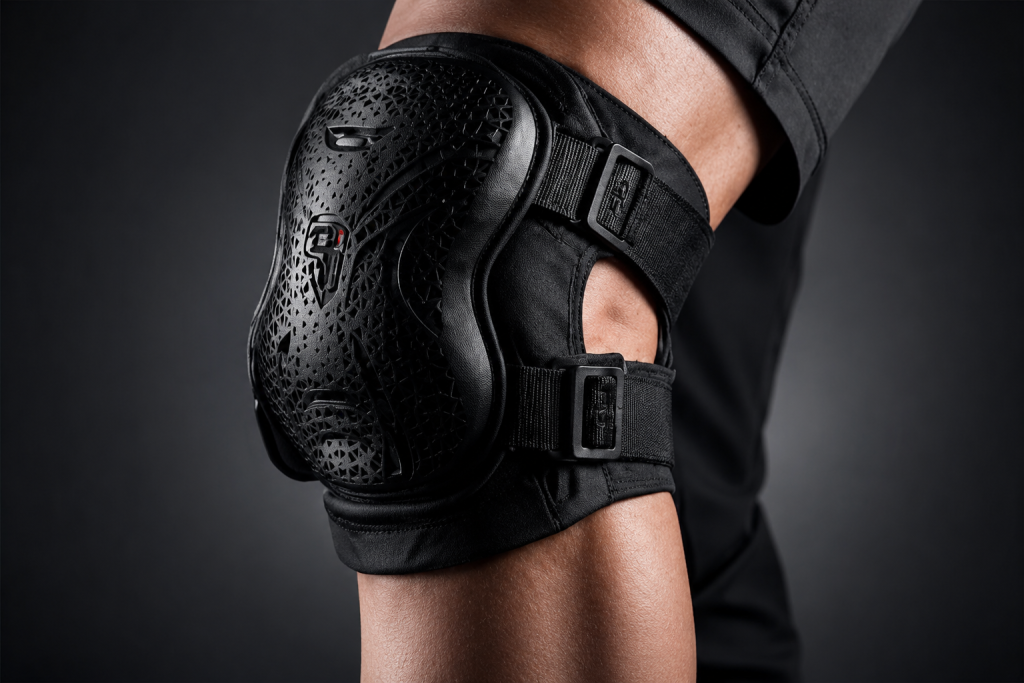
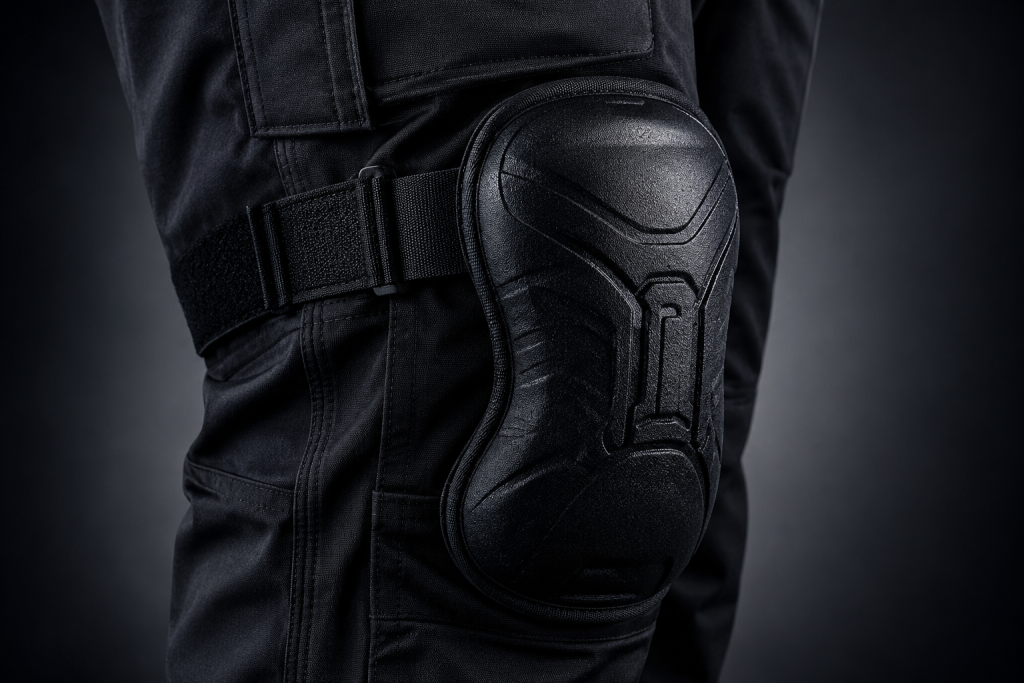
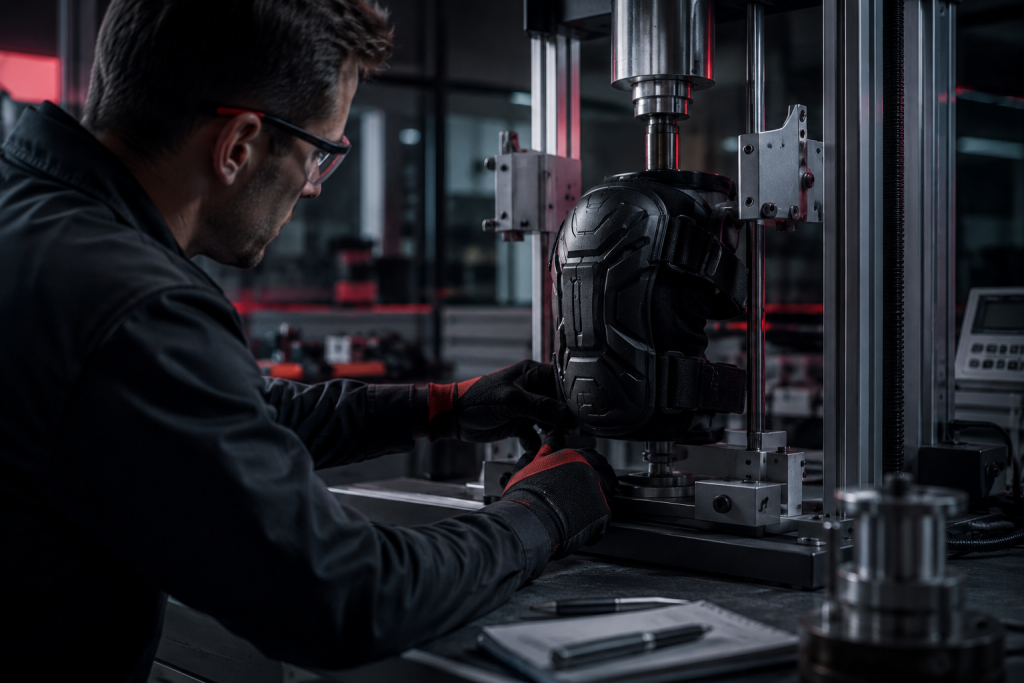
The EN 14404 standard specifies the requirements for knee protectors used when working in a kneeling position, helping to reduce the risk of injuries, chronic pain, and musculoskeletal disorders.
Why is this standard important?
Working on your knees for several hours a day without suitable protection can lead to:
Knee pain
Ligament and meniscus injuries
Premature osteoarthritis
Fatigue and discomfort reducing productivity
What does an EN 14404 knee protector protect against?
An EN 14404-compliant knee protector protects the knee against:
Impacts
Point pressure
Uneven surfaces
Small objects on the ground (gravel, screws, debris, etc.)
THE DIFFERENT TYPES OF PROTECTION
The standard distinguishes between four types of knee protectors.
TYPE 1
Independent knee protectors that attach around the leg using straps.
Example of use: Independent craftspeople, occasional work.
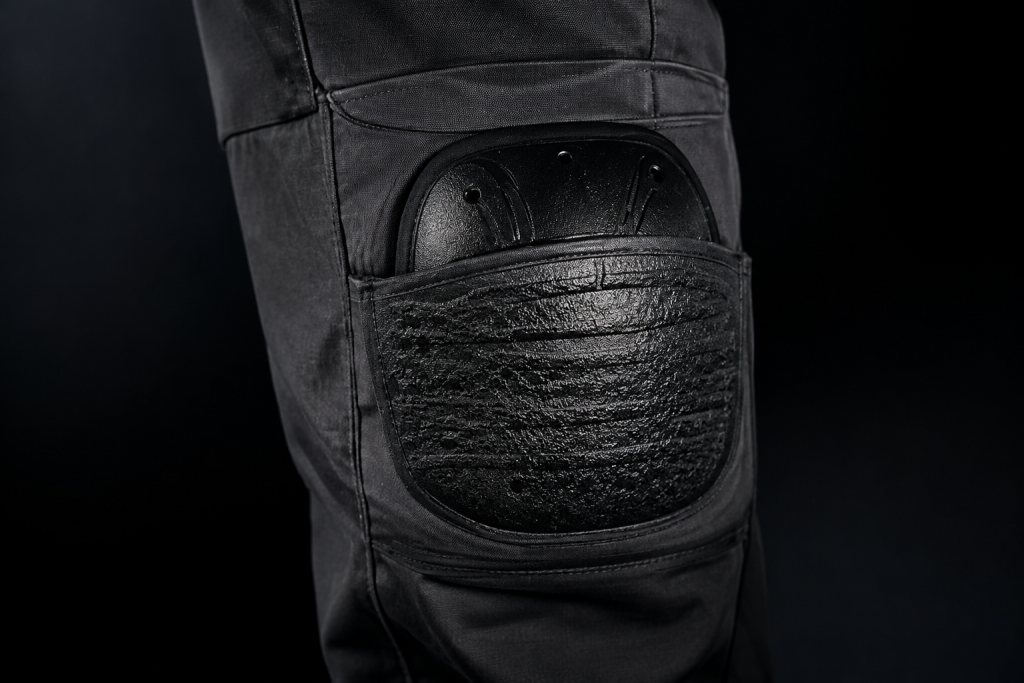
TYPE 2
Foam or technical material protectors inserted into the designated pockets of work trousers.
This is currently the most widely used solution in the construction industry.
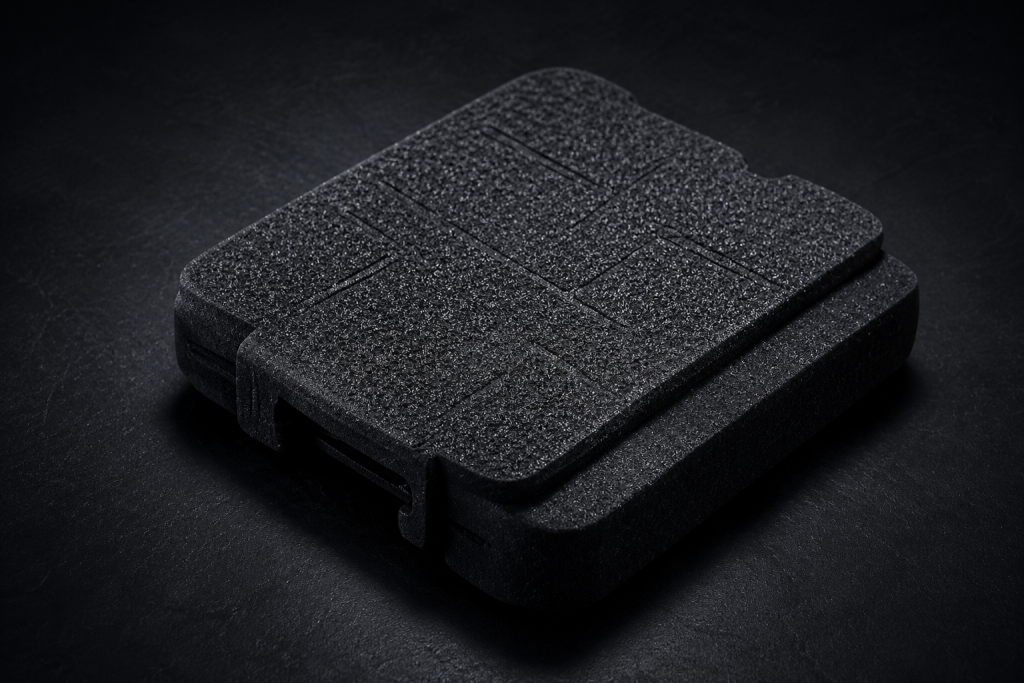
TYPE 3
Devices not attached to the body that can be moved around as needed (protective cushions).
TYPE 4
Devices not attached to the body that can be moved around as needed (protective cushions).
PERFORMANCE LEVELS
The standard defines several levels of protection depending on the conditions of use.
LEVEL 0
Protection suitable for flat, clean surfaces.
LEVEL 1
Protection suitable for hard surfaces with occasional small debris. This is the level most commonly sought by craftspeople.
LEVEL 2
Protection designed for the most demanding conditions. It also protects against smaller objects that can exert high localized pressure.
TESTING PERFORMED
An EN 14404-certified knee protector must undergo several tests:
Puncture resistance
Absorption of pressure exerted on the knee
Protection stability
Retention during movement
Minimum dimensions of the protected area
Ergonomics and comfort
The tests are carried out in accredited laboratories.
TARGET USERS
This standard applies to many construction trades, including:
TILERS
MASONS
ROOFERS
PLUMBERS
HEATING ENGINEERS
ELECTRICIANS
DRYWALL INSTALLERS
FLOORING INSTALLERS
CARPENTERS
CHARPENTIERS
LANDSCAPERS
MAINTENANCE TECHNICIANS
EUROPEAN STANDARD
EN 1621-2 STANDARD
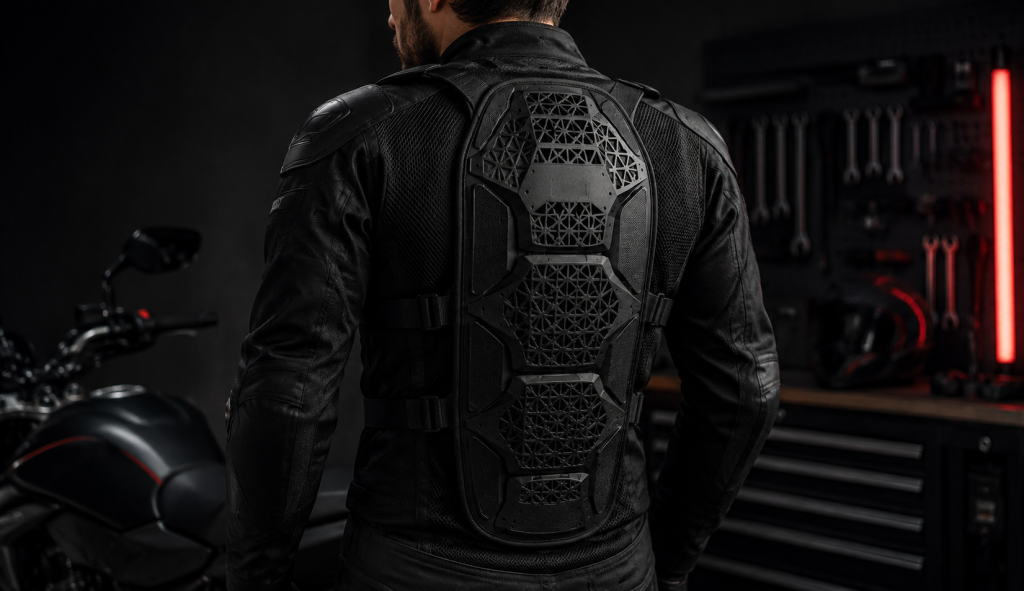
Motorcycle Back Protectors
The EN 1621-2 standard defines the protection requirements for back protectors designed for motorcyclists.
It measures a back protector’s ability to reduce the force transmitted to the body during an impact.
A TEST CONDUCTED AT AN ENERGY LEVEL OF 50 JOULES
During testing, the back protector is subjected to impacts corresponding to an energy level of 50 joules.
The objective is not simply to measure the amount of energy “absorbed” by the back protector, but above all to determine the residual force transmitted to the user after impact.
The lower the transmitted force, the more effective the protection.
PERFORMANCE LEVELS
The standard defines several levels of protection depending on the conditions of use.
LEVEL 1
Average transmitted force: ≤ 18 kN
Maximum force for a single impact: ≤ 24 kN
Level 1 is the basic protection level defined by the standard.
LEVEL 2
Average transmitted force: ≤ 9 kN
Maximum force for a single impact: ≤ 12 kN
An EN 1621-2 Level 2 back protector therefore limits the force transmitted to the body during an impact more effectively than Level 1.
A question about our standards or protective solutions?
Our team is here to support you with your projects.